

Hiddlins is an independent full-stack web development studio. We design and build fast, accessible, honest websites and web applications, and we care a great deal about the parts most people never notice: the hidden details that decide whether a site feels effortless or frustrating.
Where we started: a portfolio that grew up#
Hiddlins did not begin as a business plan. It began as a personal portfolio for an aspiring full-stack developer with a broad range of interests, including UI/UX design, data visualization, artificial intelligence and machine learning. The original About page ended with a simple invitation: we were freelancing, and if you wanted to discuss a project, we would love to hear from you.
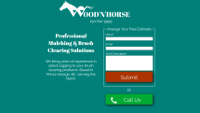
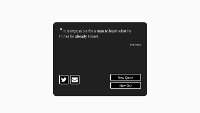
That portfolio held a handful of honest, small projects. There was Wood’N’Horse, a website for a small business, and a Random Quote Machine built as one of the front-end challenges in the Free Code Camp curriculum and published on CodePen. The skills listed underneath were just as modest: HTML5, JavaScript and PHP. None of it was glamorous, but all of it was built by hand, with attention, by someone who genuinely enjoyed working out how things fit together.
Over time the projects became more varied and the requests became more serious. People asked for online shops, for help with a slow WordPress site, for a dashboard that turned a spreadsheet into something they could actually read. The portfolio slowly turned into a studio. The name stayed, the curiosity stayed, and so did the habit of talking to clients directly instead of through layers of process. What changed is that we now take on that work deliberately, with a clear process, fixed scopes and a long-term commitment to the sites we build.
You can still see where we came from. The archive projects remain on our portfolio, because we think it is more honest to show the real starting point than to pretend we arrived fully formed.
Our mission#
Our mission is simple to say and harder to do: build websites that respect the people who use them and the people who own them.
Respecting visitors means pages that load quickly on an ordinary phone over an ordinary connection, that work with a keyboard and a screen reader, and that say clearly what they offer without tricks or dark patterns. Respecting owners means fair, transparent pricing, code that is readable and documented, no lock-in, and straight answers when something is not a good idea.
We would rather build a smaller site that works beautifully than a larger one that looks impressive in a presentation and struggles in the real world.
What we believe#
Performance is a feature#
Speed is not a technical nicety; it is part of the experience. Slow pages lose attention, and people on older devices or patchy mobile data feel it most. We design against real performance budgets, measure with Google’s Core Web Vitals (Largest Contentful Paint, Interaction to Next Paint and Cumulative Layout Shift) and choose lean tools by default. Often that means plain, modern JavaScript instead of a heavy framework, an approach we explain in Modern JavaScript Without the Bloat.
Accessibility is not optional#
The web is for everyone. We start from semantic HTML, test keyboard navigation and focus states, check colour contrast, write meaningful alternative text and work towards the WCAG 2.2 AA success criteria. Accessibility done early costs very little; retrofitted later, it costs a lot. Our WCAG 2.2 guide for small businesses covers the practical side.
Honesty over hype#
We will not promise you the top spot on Google, invent statistics, or quote a low number and recover it later through change requests. If a plugin will do the job better than custom code, we will say so. If your budget does not fit your scope, we will help you find the version of the project that does. And on this site you will not find made-up testimonials or inflated numbers; what you see is what we have actually done.
You own your code#
When your project is paid for, the code, the content, the domain and the hosting accounts belong to you. We use standard, well-supported technologies, keep everything in version control, and hand over documentation so that any competent developer could pick up where we left off. We want you to stay with us because the work is good, not because leaving is difficult.
Our skills and stack#
Our toolkit has grown from those first three skills, but the foundations are the same. We prefer stable, well-documented technology that will still make sense in five years.
- HTML5 and CSS: semantic, accessible markup and modern, maintainable layouts using grid, flexbox and custom properties.
- JavaScript: progressive enhancement, vanilla JavaScript where it is enough, and frameworks where an application genuinely needs them.
- PHP: modern PHP 8 for custom back ends, APIs and integrations. We wrote about the language features we rely on in Modern PHP 8.
- WordPress and WooCommerce: custom themes and blocks, careful plugin selection, security hardening and store performance.
- UI/UX design: research-led information architecture, wireframes, interface design and usability testing.
- Data visualization: charts, dashboards and interactive graphics using SVG, Canvas and, where it pays off, WebGL.
- AI and machine learning: practical, privacy-aware features such as smart search, classification and in-browser inference, plus making your content easy for AI search engines to understand and cite.



How we work#
We kept the best part of freelancing: direct collaboration. You talk to the people who are actually designing and building your site. There is no account manager relaying messages and no surprise hand-off to someone you have never met.
Every project follows the same clear path, which we describe in detail on our process page:
- Discovery. We learn about your goals, your audience and your constraints, and we ask a lot of questions.
- Proposal. You get a written scope, a fixed price or a clearly explained estimate, and a realistic timeline.
- Design. We shape the structure and the interface, and you review it before any production code is written.
- Development. We build in small, reviewable steps on a private staging site you can visit at any time.
- Quality assurance. We test across browsers and devices, check accessibility and performance, and fix what we find.
- Launch. We deploy carefully, set up analytics and search essentials, and hand over documentation.
- Care. If you want ongoing support, our care plan keeps everything updated, backed up and monitored.
We communicate in plain language, share progress regularly and write things down, so you always know what has been decided and what happens next.
Who we work with#
We do our best work with people who care about quality and want a partner rather than a vendor. That typically includes:
- Small and independent businesses that need a fast, trustworthy website or an online shop they can run themselves.
- Founders and product teams who need a custom web application, a prototype or a reliable back end.
- Organisations with an existing site that is slow, hard to update or not being found, and who want a clear diagnosis before spending more money.
- Agencies and designers who need a dependable development partner to bring their designs to life.
If you are not sure whether your project fits, ask. If we are not the right studio for it, we will tell you, and where we can, we will point you towards a better option.
Our values#
- Craft. We sweat the details, from the spacing in a button to the way an error message reads.
- Curiosity. We keep learning, experimenting and sharing what we find on our blog.
- Clarity. Clear scopes, clear prices, clear code and clear communication.
- Care. For the people who use your site and for the long-term health of what we build.
- Candour. We tell you what we think, including when the answer is “you do not need this”.
- Ownership. Your project, your code, your data. Always.
Why the name “Hiddlins”?#
“Hiddlins” is a Scots word for hiding places, secret places: the nooks you only find if you know where to look. We liked it because it describes where good websites are really made.
Most visitors will never see the semantic markup that lets a screen reader make sense of a page, the image that is sized just right so the layout does not jump, the database query that was rewritten so a product page loads instantly, or the focus outline that tells a keyboard user exactly where they are. Those hidden details are invisible when they are done well and painfully obvious when they are missing. They are the hiddlins of the web, and they are what we enjoy most.
You can see a small example right on our home page: the particle animation in the hero is a little creative-coding experiment, built from scratch with the Canvas API and designed to stay light on resources. If you are curious how it works, we wrote it up in Building a Lightweight Canvas Particle Animation from Scratch.
Let’s talk about your project#
The invitation from that original portfolio still stands. If you have a project in mind, a site that needs rescuing, or just a question about where to start, we would love to hear from you.
Browse our services, check indicative costs with the estimator on our pricing page, or contact us directly. We aim to reply within one business day, and the first conversation is always free and without obligation.
Frequently asked questions
Is Hiddlins an agency?
We are a small independent studio rather than a traditional agency. You work directly with the people designing and building your project, without account managers or layers of hand-offs in between.
What kind of projects do you take on?
We build landing pages, WordPress websites, WooCommerce stores and custom web applications, and we also run performance and technical SEO audits and ongoing care plans. If your project sits somewhere between those, get in touch and we will tell you honestly whether we are a good fit.
Do we own the code you write for us?
Yes. Once your project is paid for, the code, content and accounts we set up for it belong to you. We document what we build so that you, or any other developer, can maintain it in the future.